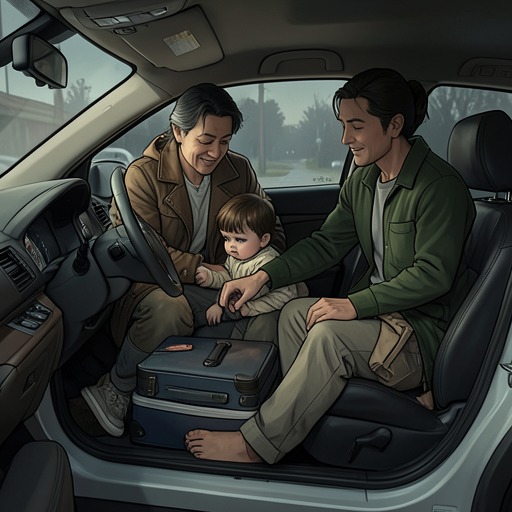
Thirty years after the family’s departure, in 1968
Liesel's Return
Blind and accompanied by her daughter, Liesel returns to the modernist house she and Viktor once built. She knows the approach and interior by memory, navigating the forecourt and stairs until she reaches the Glass Room, where the space summons vivid images of her former life.
Hana recognizes her, and their embrace reunites two women whose friendship survived war, distance, and decades of separation. The return frames the house as both a physical place and a vessel for memory.
1928, immediately after Liesel and Viktor’s wedding
The Wedding Journey
Liesel and Viktor leave for their honeymoon in [Vienna](entity:location-recall-location-8daae28d814e) and then drive south in a Landauer car. At the Sacher Hotel, their first lovemaking is unexpectedly awkward, while their conversations reveal Viktor’s ambition to build a new kind of house and his impatience with inherited styles.
In [Venice](entity:location-recall-location-venice-0377938b8d6a), they visit a cemetery by the [Tagliamento River](entity:location-recall-location-tagliamento-river-1ba25b29af6d) and mourn Liesel’s brother [Benno](entity:character-recall-character-benno-798c3859b8f6), whom Viktor last saw during the war. Their shared grief briefly deepens their intimacy before the city’s light and the journey’s excitement restore their spirits.
During the honeymoon in Venice, 1928
Meeting Rainer
At a Venetian gathering, Liesel challenges an Italian admirer of Fascism and modernity. [Rainer von Abt](entity:character-recall-character-rainer-von-abt-47c5641bdf40) interrupts, mocking the idea of destroying [Venice](entity:location-recall-location-venice-0377938b8d6a) in the name of progress; his blend of wit, provocation, and architectural conviction immediately intrigues the couple.
The next day he takes them to an exhibition and shows them his pavilion model. Viktor recognizes that von Abt is an architect, though von Abt insists he is a poet of space and form. Their conversation plants the idea of a house built around light and open space.
Late summer 1928
The House Commission
Viktor asks von Abt to design the couple’s future home on a hillside overlooking [Město](entity:location-recall-location-m-sto-420e7fd82c6a). The architect resists the ordinary demands of a client and describes a commission as a chance to create an artwork and a way of life, not simply a structure.
After studying von Abt’s work and sketches, Viktor and Liesel formally appoint him. The commission transforms their abstract dream of a modern home into a project with plans, costs, and deadlines.
Late summer 1928
Liesel's Pregnancy
During a visit to the building site, Liesel tells von Abt that she is expecting a child. He immediately sketches a house with an infant on its terrace, treating the family’s future as part of the design itself.
On the sloping meadow, Liesel remembers childhood visits with [Benno](entity:character-recall-character-benno-798c3859b8f6) and the illness that kept her apart from him before he went to war. Von Abt listens, photographs the site, and declares that he will build the house upside down, a promise that leaves its meaning unexplained.
1929, during Liesel’s first pregnancy
The House Takes Shape
Von Abt’s plans place the bedrooms at street level and the principal living space below, suspended from a steel frame and opened to the garden through vast glass panes. Liesel embraces the radical design, while Viktor worries about its cost, its coldness, and whether a home can feel like an office or factory.
Liesel insists that the house is where she wants to live with her husband and daughter. Her confidence helps turn Viktor’s earlier modernist conviction into a shared commitment to the unfamiliar structure.
April 1929
The First Birth
While the steel frame rises on the hillside, Liesel gives birth to [Ottilie](entity:character-recall-character-ottilie-dc0fed340453) in a clinic using the Twilight Sleep method. Morphine eases the pain, while scopolamine erases her memory of the delivery.
The birth gives the still-incomplete house a human future: the child imagined in von Abt’s drawings is now real. Liesel’s experience of motherhood begins alongside the construction of the family’s new home.
Winter 1929–1930, as the house nears completion
The Onyx Dispute
When the shell of the house is ready, Viktor and Liesel inspect its bare rooms and try to imagine their future life there. Von Abt proposes an onyx partition for the Glass Room, a striking but extraordinarily expensive feature that Viktor initially resists.
Liesel persuades him that the stone’s beauty and symbolic meaning justify the expense. After an encounter with Kata in [Vienna](entity:location-recall-location-8daae28d814e), Viktor reverses his decision and tells Liesel she may have the wall, explaining his change of heart only with the word “fingernails.”
During a business trip to Vienna, before the Landauer House is finished
The Affair Begins
In the [Prater](entity:location-recall-location-prater-518ca9dd0a74), Viktor meets Kata, a young woman who tells him she works with hats and sometimes accepts money from men to supplement her wages. They ride the [Wiener Riesenrad](entity:location-recall-location-wiener-riesenrad-c88f32c2aea5) together, then go to a hotel, where she is frank about the transactional nature of their encounter.
Viktor nevertheless stays to talk with her and later seeks her out again. Their brief commercial arrangement begins to acquire emotional weight for him, creating a secret life that runs alongside his marriage to Liesel.
During a later Vienna visit, when Ottilie is about seventeen months old
Kata's Daughter
Viktor meets Kata again at [Die Goldene Kugel](entity:location-recall-location-die-goldene-kugel-d37426e10f70) and follows her to her small attic apartment. There he discovers that she has a young daughter, [Marika](entity:character-recall-character-marika-ddc3a2bf8a9d), whom she had not told him about; the child’s sudden appearance makes the private arrangement feel less separate from ordinary life.
Kata explains that she sometimes brings clients home and that a neighbor watches Marika. Viktor gives her a large cheque intended for her and the child, asking her to stop seeing other men. He leaves feeling both elated and remorseful, unable to return to his former sense of control.
Late 1930, before the family’s housewarming
The Glass Room Completed
The builders install the onyx partition, furnishings, curtains, and glass walls, turning the bare structure into the luminous Glass Room. Light shifts across the stone, chrome, and ivory floor, making the room seem at once precise and dreamlike.
Viktor and Liesel move into the house and regard its openness as a new way of living. The Maillol sculpture of a pregnant woman provides the one deliberate figurative ornament, a reminder that the abstract space is meant to be inhabited by a family.
December 1930
The Housewarming
The Landauers host a party that becomes an informal public unveiling of the house. Artists, architects, musicians, journalists, and industrialists admire the building, while von Abt presents it as a work of art that demands an equally artful life from its inhabitants.
Viktor quotes André Breton’s vision of living in a glass house and speaks of openness. [Vítězslava Kaprálová](entity:character-recall-character-v-t-zslava-kapr-lov-a1229e10b272) plays Ravel, and Hana, watching the guests and the winter sky, warns Liesel that the good times cannot last.
Early 1931
A Public Defense
An architectural journal questions whether the [Landauer House](entity:location-recall-location-landauer-house-918b6d333800) is habitable, criticizing its expense and open-plan arrangement. Liesel answers the debate in a letter, describing the house as a collaborative project and defending the curtains and flexible spaces as practical as well as beautiful.
Viktor teasingly challenges her claims about privacy, and they make love in the Glass Room with its curtains drawn. The scene briefly joins the house’s ideal of openness to the private life it was built to hold.
After the housewarming, in the early 1930s
A Second Pregnancy
Liesel becomes pregnant again while Viktor’s company promotes the Landauer Popular as a car that might bring ordinary families into the modern world. In the Glass Room, she moves through the house in white, while Hana confides that she has been trying unsuccessfully to conceive.
Viktor continues his affair with Kata in [Vienna](entity:location-recall-location-8daae28d814e). The contrast between Liesel’s idealized, visible domestic life and Viktor’s concealed relationship grows, even as the couple’s outward routines remain intact.
After Liesel’s second pregnancy, early 1930s
Martin's Birth and Liesel's Illness
[Martin](entity:character-recall-character-martin-f5cb6653498c) is born by forceps delivery after a difficult labor. Liesel develops a high fever and slips into delirium, leaving the doctors and family fearful that she may die.
Hana devotes herself to caring for Liesel, proving that her friendship is more than a social pleasure. Liesel survives but returns home weakened and emotionally altered, and her intimacy with Viktor becomes more remote.
The mid-1930s, before the political crisis
Life in the Glass House
The narrative follows an ordinary day in the Landauer home: the children move between German and Czech, Liesel tends the garden and practices piano, and Viktor leaves for the factory. Their routines make the house feel like a carefully designed world, but news from [Germany](entity:location-recall-location-a3c24dd56e42) increasingly intrudes.
Viktor recognizes that Nazi measures against Jews are becoming law and begins to feel his own Jewish identity as a fact others can use against him. He argues for a charity event at the house, while Liesel worries about renewed public intrusion.
Mid-1930s, during a dinner at the Landauer House
The Nazi Guest
A German industrialist, Schreiber, arrives wearing a Nazi badge and praises the house as an expression of German culture. He presses Viktor to accept a duty to German blood and German nationalism.
Viktor rejects the premise, declaring that he is a Jew rather than a German. The exchange exposes the danger beneath the couple’s internationalist ideal: their house may be admired, but their identities are already being sorted by a hostile political order.
After the dinner with Schreiber, before the German occupation
Hana's Confession
After a difficult affair with [Miroslav Němec](entity:character-recall-character-miroslav-n-mec-fcac0283d907) ends, Hana confides in Liesel at the house. She admits that she has loved Liesel for years and asks whether a woman can love another woman fully and sexually.
Liesel is startled but reassures Hana that she could never hate her. They share music and talk through the night, while Liesel recognizes that Hana’s love adds an unspoken complexity to the friendship and to her own feelings.
Later in the 1930s, before the Anschluss
Mandl's Dinner
At a dinner in the Glass Room, arms dealer [Fritz Mandl](entity:character-recall-character-fritz-mandl-6e9f2996f5fb) arrives with his wife Eva, whom Hana recognizes as the actress Hedy Kiesler. Mandl is embarrassed by his wife’s film career and boasts that Hitler has made him an honorary Aryan.
Viktor questions the security of such an exemption, while Hana points out that German racial laws condemn relationships across religious lines. The discussion exposes the hollowness of Mandl’s confidence and the growing threat to Jews and their families.
Autumn 1937
Funds Moved to Switzerland
As violence and antisemitism intensify, Viktor quietly transfers money from his [Prague](entity:location-recall-location-prague-cf59465294ca) and [Vienna](entity:location-recall-location-8daae28d814e) accounts into a Swiss account. He does not tell Liesel at first, treating the move as prudent preparation rather than a decision to leave.
The hidden transfer foreshadows the family’s flight and shows that Viktor has begun to act on the danger even while Liesel still hopes their life at home can continue.
Before the German annexation of Austria
Hana Frees Eva
Hana later tells Liesel that she helped Eva escape from [Fritz Mandl](entity:character-recall-character-fritz-mandl-6e9f2996f5fb). After arranging a meeting at the Sacher, Hana smuggles Eva out through a back entrance, helps her change clothes in a waiting taxi, and gets her onto a train.
Eva wants to resume her acting career, while Mandl has kept her under close control and tried to destroy copies of her film. Hana’s intervention gives Eva a chance to choose her own future and deepens the intimacy between Hana and Liesel through the story’s retelling.
March 1938
Anschluss
Radio broadcasts report the German takeover of [Austria](entity:location-recall-location-89f4a73979b6), and Viktor wonders where Kata has gone. Refugees cross into [Czechoslovakia](entity:location-recall-location-91214c889381), bringing the consequences of Nazi rule directly into the streets of [Město](entity:location-recall-location-m-sto-420e7fd82c6a).
Viktor tells Liesel that the family may have to emigrate, explaining that Jews in [Germany](entity:location-recall-location-a3c24dd56e42) and Austria face escalating restrictions and dispossession. Liesel resists the prospect of abandoning home, the business, and their community, while Viktor insists that waiting could leave them trapped.
Spring 1938, at a refugee committee meeting
Kata Returns as a Refugee
At a meeting in the Glass Room, refugees are brought before a committee to describe what has happened in [Austria](entity:location-recall-location-89f4a73979b6). Among them is Kata, now a widow and a seamstress, with her daughter [Marika](entity:character-recall-character-marika-ddc3a2bf8a9d). Viktor recognizes her, and she recognizes him, though neither can safely acknowledge their past.
Kata recounts the destruction of her workplace and the violence that forced her to flee [Vienna](entity:location-recall-location-8daae28d814e). Liesel offers shelter in the family’s garden cottage, creating an unexpected reunion between Viktor’s secret past and his household’s public response to persecution.
Spring 1938, shortly after the refugee meeting
Kata Settles in the Chata
Kata and [Marika](entity:character-recall-character-marika-ddc3a2bf8a9d) move into the Landauer family’s small garden cottage. Liesel arranges practical help and work for Kata, while Viktor finds himself alone with the woman he has long missed and admits that he has thought of her constantly.
Kata warns him that she stopped seeing him because she feared losing what little power she had. Their renewed attraction remains dangerous and unresolved, now entangled with the family’s plans to escape and the refugee’s dependence on their protection.
Spring and summer 1938
The Company Transfer Plan
As the threat of invasion grows, Viktor proposes transferring ownership of [Landauer Motors](entity:organization-recall-organization-landauer-motors-9d857159de7c) to Liesel’s father while continuing to manage the company. He hopes to protect the business and leave himself free to flee if the country becomes unsafe for Jews.
Liesel remains skeptical, but Viktor sees preparation as essential. His plan demonstrates the widening gap between his urgent reading of events and her hope that their home and country can endure.
Summer 1938
Viktor's Second Life
Kata and [Marika](entity:character-recall-character-marika-ddc3a2bf8a9d) become part of the household’s daily orbit, and the children play together in the garden. Viktor watches from the Glass Room, longing for Kata while keeping up the appearance of a respectable family life.
He leaves her a note asking to see her, then struggles with the difference between his outward plans and his private desire. The house that was meant to embody transparency becomes a setting for concealment.
Late summer 1938
The Nanny Proposal
When Liba announces that she will marry and leave the household, Liesel suggests that Kata take her place as governess and that [Marika](entity:character-recall-character-marika-ddc3a2bf8a9d) come with the family. She frames the offer as both practical and a moral obligation to people they have come to know.
Viktor is startled, then visits Kata to convey the proposal. He admits that he wants more than to help her, while she challenges him to leave his wife if he truly loves her. He cannot do so, but begs her to come with them.
September 1938
The Munich Crisis
As the crisis over the [Sudetenland](entity:location-recall-location-531d3d07fd7e) deepens, Viktor, Liesel, Hana, and [Oskar](entity:character-recall-character-oskar-ea89577afe7e) listen to Neville Chamberlain’s radio address. Chamberlain’s words reduce the threatened country to a distant quarrel, and the group understands that the great powers will not defend it.
The [Munich](entity:location-recall-location-d277927d86b1) settlement leads to the dismemberment of [Czechoslovakia](entity:location-recall-location-91214c889381). German troops enter the border regions, Poland and Hungary take territory, and refugees stream away from the advancing forces. Viktor concludes that the remaining state cannot be defended.
Winter 1938–1939
Preparing to Leave
After the dismemberment, Viktor insists that the family must leave before German forces take the rest of the country. Liesel grieves the possibility of abandoning the house and her family, while Viktor argues that their Jewish identities make them vulnerable regardless of their citizenship or beliefs.
He books a flight for March and arranges documents and transport for the household, including Kata and [Marika](entity:character-recall-character-marika-ddc3a2bf8a9d). Hana and [Oskar](entity:character-recall-character-oskar-ea89577afe7e) remain behind, unwilling or unable to leave with them.
March 1939, as German troops enter Město
Hana's Farewell
On the day the Landauers prepare to leave, Hana arrives distraught and drunk, describing the occupation and the collapse of ordinary life. She asks Liesel how she can bear to abandon the house, the country, and her friends.
Hana tells Liesel that she loves her above all others. Liesel answers with affection but cannot promise to stay; the family is leaving with Kata and [Marika](entity:character-recall-character-marika-ddc3a2bf8a9d). Their farewell turns the coming flight into a personal separation as well as a political one.
March 17, 1939
The Flight from Město
The family’s convoy heads for the Černovice airfield through a strangely quiet city. German troops block their way near the station as [Adolf Hitler](entity:character-recall-character-adolf-hitler-e6e3f1777476)’s motorcade passes, and Viktor negotiates permission to continue rather than let the delay cost them their flight.
At the airfield, the family boards a Swissair plane for [Zurich](entity:location-recall-location-36d13535e481). As the aircraft lifts away, Liesel sees the [Landauer House](entity:location-recall-location-landauer-house-918b6d333800) below and weeps at the thought that she may never return.
After the Landauers’ departure, 1939
The House Is Confiscated
While the family is in exile, an official informs caretaker [Laník](entity:character-recall-character-lan-k-18eb3bbda911) that the house has passed into government hands. Laník asks what will happen to him and his sister, but the official offers no certainty and suggests that the building may be demolished.
The family’s lawyers later confirm that the house has been confiscated because Viktor is Jewish. Liesel breaks down when she learns that the home she and Viktor built may be destroyed, mourning not only the building but the life and love attached to it.
After the German occupation, 1939
Stahl Takes the House
[Werner Stahl](entity:character-recall-character-werner-stahl-156bcc9f24e3) arrives at the [Landauer House](entity:location-recall-location-landauer-house-918b6d333800) and persuades [Laník](entity:character-recall-character-lan-k-18eb3bbda911) to let him inspect the property. He sees a modern, glass-walled space suitable for his proposed research and learns that the owners were Jews who have emigrated.
The house is converted into a center for racial biology and biometric measurement. Staff install measuring equipment, a photographic studio, and Hollerith machines, transforming a home designed to celebrate open space into an instrument for classifying human beings.
From 1939 onward during the German occupation
The Biometric Examinations
The center brings groups of people into the former Glass Room for questionnaires, blood tests, measurements, and nude photographs. Scientists record physical features and family histories, claiming that the data will reveal racial distinctions.
Stahl watches the examinations and treats the subjects as specimens, while the precise procedures expose the moral fraud of the center’s claims to objectivity. The house’s carefully designed proportions become a stage for the Nazi classification of people as worthy or unworthy.
During the occupation, before Operation Barbarossa
Hana Meets Stahl
Hana encounters Stahl at the Café Zeman and learns that he directs the research center in the [Landauer House](entity:location-recall-location-landauer-house-918b6d333800). She tells him that she was a close friend of Liesel and agrees to visit the center, partly from curiosity and partly to remain connected to the house.
Stahl’s attention to Hana shifts from scientific interest to sexual fascination. Their meetings become an exploitative relationship in which Hana seeks help for her Jewish husband, [Oskar](entity:character-recall-character-oskar-ea89577afe7e), while Stahl imagines that his racial theories can account for the attraction he feels.
During Hana’s relationship with Stahl
Hana's Examination
Hana undergoes the center’s examination, challenging Stahl as he measures and photographs her. She questions whether his scientific procedures can capture the complexity of a human being and mocks his assurances that the records are confidential.
Stahl is unable to keep his desire separate from his work. Afterward he studies Hana’s file and photographs, finding that no measurements can explain the woman he has encountered.
During the occupation, after Hana’s examination
Hana and Stahl's Affair
Hana and Stahl meet privately, and she uses his desire to secure money and assistance for [Oskar](entity:character-recall-character-oskar-ea89577afe7e). She asks him about his family and learns that his wife, [Hedda](entity:character-recall-character-hedda-e2455d4e5369), died by suicide after their daughter [Erika](entity:character-recall-character-erika-bd4ba8b24ed6) became severely disabled.
Stahl describes Erika’s terminal inherited disease and confesses that he and Hedda took her to [Hartheim Castle](entity:location-recall-location-b864d2396655), where she was killed. His account reveals both the private trauma behind his racial obsessions and his participation in the Nazi killing of disabled children.
Several years before Stahl meets Hana
Erika Is Killed
[Erika](entity:character-recall-character-erika-bd4ba8b24ed6) develops infantile amaurotic disease after an apparently normal infancy, losing her sight, movement, and ability to respond. Stahl and [Hedda](entity:character-recall-character-hedda-e2455d4e5369) learn that the illness is incurable and will end in her death.
When Erika is four, her parents take her to [Hartheim Castle](entity:location-recall-location-b864d2396655), where she is killed by injection. Hedda cannot live with the decision and later takes her own life, leaving Stahl to turn private grief into a brutal theory of racial degeneration.
During Hana and Stahl’s relationship, after his confession
The Camp Story
Hana and Stahl continue their relationship in the Glass Room, where the setting’s ideal of transparency is contradicted by secrecy, desire, and fear. Hana’s boldness unsettles Stahl, who experiences attraction and repulsion as if they were evidence of racial difference.
Hana’s encounters with him are tied to [Oskar](entity:character-recall-character-oskar-ea89577afe7e)’s safety, but she also finds herself drawn into an intimacy that neither can control. Their relationship places private desire inside the same house that is being used to measure and classify people.
During the German occupation, after the invasion of the Soviet Union
Hana Announces Her Pregnancy
After [Germany](entity:location-recall-location-a3c24dd56e42) invades the Soviet Union, Hana confronts Stahl at the center and tells him that she is pregnant, insisting that the child is his. She wants to keep the baby and asks him to help her decide what to do.
Stahl strikes and rapes her, responding to the news with violence and racial contempt. He later gives her money and leaves her at home, where she tells him that the child is the only future she has.
After Hana tells Stahl she is pregnant, during the occupation
Hana Is Arrested
[Stahl reports Hana to the SS security service](entity:action-recall-action-7f636e072cf8), describing her as subversive and friendly to Jews. He then turns to other work, trying to suppress the personal consequences of his actions.
His betrayal helps bring about the arrest of Hana and [Oskar](entity:character-recall-character-oskar-ea89577afe7e). Stahl’s decision demonstrates how easily his private fear and resentment become instruments of the state’s persecution.
At Ravensbrück, during the war
Hana Gives Birth to Světla
Hana later tells Zdenka that she gave birth to a daughter, Světla, while imprisoned at [Ravensbrück](entity:location-recall-location-06d9c1b89e3e). The women in her barrack helped her, and for a brief time the child’s existence gave Hana a reason to survive the camp.
The baby was taken away after failing to feed, and Hana never saw her again. She had kept this history secret for decades, carrying the loss as both an intimate wound and a fact of the larger machinery of persecution.
During the war, after the arrest of Hana and Oskar
Oskar's Deportation
Hana’s husband, [Oskar](entity:character-recall-character-oskar-ea89577afe7e), is sent to [Terezín](entity:location-recall-location-f3da3aea4d2f) and later transported to [Auschwitz](entity:location-recall-location-3c4eaac5dda5). Hana survives [Ravensbrück](entity:location-recall-location-06d9c1b89e3e), but she never learns with certainty what happened to him during the war.
The loss explains why Hana later speaks of her husband with enduring love and guilt. Her efforts to protect him through her relationship with Stahl ultimately cannot prevent his deportation.
After the war begins, while the Landauers are in exile
The Family Leaves Europe
The Landauers move from [Switzerland](entity:location-recall-location-6e6c25b1c44d) through [France](entity:location-recall-location-4f282e1af8a7) and toward [Spain](entity:location-recall-location-0fe76f866976), trying to reach a route to the Americas. Liesel continues to write Hana, though wartime censorship and broken lines of communication make every letter uncertain.
The family’s destination shifts toward [Cuba](entity:location-recall-location-b871768274f6) and ultimately the [United States](entity:location-recall-location-5d55e9152db1). Liesel’s departure from Europe becomes a permanent exile, with the Glass Room and the people who remain behind receding into memory.
During the Landauers’ journey through France toward Spain
The Bayonne Detention
At [Bayonne](entity:location-recall-location-2aceed9a5c19) station, German officials inspect the travelers’ documents and separate [Katalin](entity:character-recall-character-katalin-e39147da8831) and [Marika](entity:character-recall-character-marika-ddc3a2bf8a9d) from the rest of the family. Viktor argues that their refugee papers are valid, but the officials take mother and daughter away for a procedural inquiry.
Viktor attempts to intervene and is beaten with a rifle butt. The train leaves without Katalin and Marika, carrying the Landauers onward in fear and grief; the separation becomes a lasting rupture in the family’s story.
During the family’s flight from Europe, after the Bayonne separation
Hana's Letter Arrives
As Lise Lander prepares to leave [Switzerland](entity:location-recall-location-6e6c25b1c44d), a delayed letter from Hana Hanakova arrives. Hana Hanakova writes that she is pregnant and wants the child, explaining that she has always believed herself barren and that the pregnancy has become her reason to hope. Lise Lander writes
During the war, after the family leaves Switzerland
The Crossing to America
The Landauers travel by train through [France](entity:location-recall-location-4f282e1af8a7) and [Spain](entity:location-recall-location-0fe76f866976) toward [Bilbao](entity:location-recall-location-00ac960a262f), where a ship will carry them across the Atlantic. The crowded journey is marked by delays, changing borders, and the fear that official papers may fail them. [Liesel Landauer](entity:character-recall-character-liesel-landauer-586d46b8b35e) realizes that she never posted her last message to Hanna
During the war, after the center’s research is judged unproductive
The Centre Closes
The Bohemian and Moravian Republic Protectorate Office orders the Biological Measurement Research Department closed because it has failed to identify reliable racial distinctions. The staff pack their equipment and files, and the [Hollerith tabulating machines](entity:object-recall-object-hollerith-2591b65e45ef) are sent onward to a camp complex near [Auschwitz](entity:location-recall-location-3c4eaac5dda5). The closure exposes the weakness of
During the later war years
The House Stands Empty
The Landauer Modernist House passes through several uses and then stands empty. Rain, frost, and neglect damage its structure, while a bomb blast cracks and eventually destroys part of the glass frontage
During the final years of the war
Laník Hoards Supplies
[Laník](entity:character-recall-character-lan-k-18eb3bbda911) and his sister live in the service rooms and basement while the main house remains largely unused. As shortages worsen, he accumulates food, cigarettes, fuel, and other goods, treating scarcity as an opportunity to build a private reserve.
His stockpile gives the siblings some security but also ties their survival to the house they once served. Laník’s careful hoarding contrasts with the Landauers’ lost world of abundance and with the larger collapse of ordinary life in [Město](entity:location-recall-location-m-sto-420e7fd82c6a).
November 1944
The November Bombing
A bombing raid strikes [Město](entity:location-recall-location-m-sto-420e7fd82c6a) through fog, tearing up roads and buildings. One bomb lands in the Landauer garden, narrowly missing the house and the basement where [Laník](entity:character-recall-character-lan-k-18eb3bbda911) and his sister have taken shelter.
The blast shatters the Glass Room’s plate glass and damages its interior. Laník patches the openings with tarpaulins, leaving the once-luminous space dim and wounded.
Spring 1945
The Soviet Capture
As the Red Army advances toward [Město](entity:location-recall-location-m-sto-420e7fd82c6a), German forces withdraw and fighting moves through the city. [Laník](entity:character-recall-character-lan-k-18eb3bbda911) and his sister shelter in the basement while artillery and gunfire pass overhead.
Soviet soldiers arrive on horseback, led by the decorated sergeant-major [Yevgeniya](entity:character-recall-character-yevgeniya-30ed76284732). Laník offers them slivovice, and the soldiers occupy the Glass Room, turning it into a bivouac and weapons-cleaning space. The occupation ends one regime but introduces another uncertain order.
After the war, under communist rule
The House Becomes a Gym
The former [Landauer House](entity:location-recall-location-landauer-house-918b6d333800) is adapted for the children’s hospital as a physiotherapy gymnasium. [Tomáš](entity:character-recall-character-tom-0cdbba84192a), a pediatrician, begins using the Glass Room to watch and treat children whose bodies have been damaged by polio.
The room’s light and space offer a kind of release from the children’s restricted lives, though Tomáš prefers to think of it as an eternal present rather than a place shaped by history. The building’s domestic past remains largely unknown to its new users.
About two years before the late-1960s events
Tomáš Meets Zdenka
[Tomáš](entity:character-recall-character-tom-0cdbba84192a) meets [Zdenka Vondráková](entity:character-recall-character-zdenka-vondr-kov-fe77cbc60b1d) in the physiotherapy department, where she works with children after abandoning her ambition to become a ballet dancer. Their conversations reveal opposing temperaments: she believes in hope and progress, while he distrusts the future and insists on inhabiting the present.
They begin seeing one another and fall into an affair. Zdenka’s former dance ambitions and Tomáš’s medical work converge in the Glass Room, which becomes both a place of treatment and their private refuge.
Early in Tomáš and Zdenka’s relationship
Zdenka Dances Ondine
After work, Zdenka changes into a translucent green costume and dances Ravel’s “Ondine” in the Glass Room. [Tomáš](entity:character-recall-character-tom-0cdbba84192a) sees her as a water nymph trapped inside a glass tank and falls deeply in love with her.
The dance renews the meaning of a place that he regards as a featureless present. For Zdenka, movement carries her lost ambitions; for Tomáš, her body becomes a mythic image that helps him evade the demands of commitment.
During Tomáš and Zdenka’s relationship, before their trip to Paris
Tomáš Takes Another Lover
[Tomáš](entity:character-recall-character-tom-0cdbba84192a) begins sleeping with [Eve](entity:character-recall-character-eve-09bb1968b5f4), a journalist who has her own apartment and treats their encounters with practical detachment. Eve also has a relationship with her editor, and she accepts Tomáš’s confession that he has another lover without jealousy.
Tomáš keeps the affair from Zdenka, believing that she would be devastated. His betrayal contradicts the mythic ideal he has built around her as Ondine and introduces a real risk of the curse he fears.
Later in the 1960s
Paris Together
[Tomáš](entity:character-recall-character-tom-0cdbba84192a) arranges for both himself and Zdenka to attend an international conference on polio in [Paris](entity:location-recall-location-657453741ed3). Zdenka believes their joint selection is a remarkable coincidence, unaware that Tomáš helped secure her place.
They share five days in the same hotel, living together with an intimacy that feels almost marital. Zdenka wants to stay in the West and build a life with him, but Tomáš returns to his preference for the present and avoids making a future with her.
After the Paris conference
The Paris Separation
Back in [Město](entity:location-recall-location-m-sto-420e7fd82c6a), Zdenka confronts [Tomáš](entity:character-recall-character-tom-0cdbba84192a) about their future and his emotional coldness. She argues that they could marry, seek housing, and grow old together, while he insists that the future is an illusion.
They agree to a break, and their relationship drifts apart. Their memories of [Paris](entity:location-recall-location-657453741ed3) differ, making the trip seem less like a shared foundation than a contested dream.
Late 1960s, before the return visit
The Heritage Inquiry
[Eve](entity:character-recall-character-eve-09bb1968b5f4) comes to the hospital to report on the [Landauer House](entity:location-recall-location-landauer-house-918b6d333800) and the proposal to restore it as an architectural museum. [Tomáš](entity:character-recall-character-tom-0cdbba84192a) dismisses the building’s past as irrelevant, while Zdenka is drawn to the house’s story and begins to understand it as more than a gymnasium.
A representative of the heritage committee, Hana, visits the building and tells Zdenka that she knew the Landauer family. Zdenka learns that Liesel and Viktor were forced into exile and that Hana herself survived the camps.
Late 1960s, after Hana first visits the gymnasium
The Committee Visit
A journalist and photographer return to the house with Hana and Zdenka. The group tours the building while Hana and [Laník](entity:character-recall-character-lan-k-18eb3bbda911) recount its history, and [Tomáš](entity:character-recall-character-tom-0cdbba84192a) watches from a distance, uncomfortable with the past becoming present in the room.
The photographer captures a group image of Tomáš and [Eve](entity:character-recall-character-eve-09bb1968b5f4) holding hands behind a chrome pillar. Zdenka does not notice the significance at the time, but the photograph preserves proof of the affair that Tomáš has concealed.
After the committee visit
Hana's Love for Zdenka
Hana gives Zdenka the photographs from the visit. When Zdenka sees [Tomáš](entity:character-recall-character-tom-0cdbba84192a) and [Eve](entity:character-recall-character-eve-09bb1968b5f4) holding hands in the group picture, she realizes that Tomáš has been unfaithful.
Hana comforts her, then admits that she has fallen in love with Zdenka. The confession surprises Zdenka but does not repel her; Hana leaves her free to decide whether their friendship should change.
Soon after Hana confesses her love to Zdenka
Hana's Hidden Daughter
Hana returns to the Glass Room and tells Zdenka the secret she has never shared: in [Ravensbrück](entity:location-recall-location-06d9c1b89e3e) she gave birth to a daughter, whom she named Světla. The baby was taken away after failing to feed, and Hana never saw her again.
The revelation overwhelms Zdenka, who sees the difference between [Tomáš](entity:character-recall-character-tom-0cdbba84192a)’s abstract denial of history and Hana’s lived trauma. She embraces Hana, offering the comfort that the older woman has never before been able to ask for.
1968, during the Prague Spring
The Landauers Are Invited Back
A Czechoslovak embassy official visits the Landor family in [Falmouth](entity:location-recall-location-f355fc88f1d2) to invite Liesel and her daughter to [Město](entity:location-recall-location-m-sto-420e7fd82c6a) for the house’s proposed public handover. Liesel is blind, and her son [Martin](entity:character-recall-character-martin-f5cb6653498c) objects that accepting could imply recognition of the city’s ownership.
A personal letter from Hana changes the balance. Liesel had believed Hana dead, and the news that she is alive gives Liesel a reason to accept the invitation despite the political uncertainty.
Before the 1968 return visit
Liesel Writes to Hana
Hana receives a letter from Liesel explaining that she has gone blind and that Viktor died in a boating accident in 1958. Liesel writes of the family’s American life and her wish to see the house again, while telling Hana that the old friendship remains central to her memories.
The letter also confirms that the family changed its name to Landor in the [United States](entity:location-recall-location-5d55e9152db1). Hana reads it aloud to Zdenka, who shares her grief and affection for the absent woman.
1968, after the Prague Spring reforms begin
The Return to Město
Liesel and [Ottilie](entity:character-recall-character-ottilie-dc0fed340453) travel back to [Město](entity:location-recall-location-m-sto-420e7fd82c6a) for the house’s public opening. At the restored [Landauer House](entity:location-recall-location-landauer-house-918b6d333800), Liesel is surrounded by officials and visitors and recognizes Hana by her voice and movement.
The reunion restores the women’s intimacy, but the house is now a public monument and the city’s political future is uncertain. Liesel meets Zdenka and [Tomáš](entity:character-recall-character-tom-0cdbba84192a), learning that the former living room has become a hospital gym.
1968, during Liesel’s visit
A Fragile Political Spring
Liesel asks [Tomáš](entity:character-recall-character-tom-0cdbba84192a) whether the country’s political opening will last. He compares the reform period to patients with encephalitis lethargica who briefly awakened under L-Dopa before slipping back into sleep.
His bleak answer anticipates the Soviet invasion and the end of the reform experiment. Outside the official speeches, Liesel and Hana walk down through the garden and remember what the house and their friendship once meant.
After the Landauer women’s return, in the late 1960s
The House's New Life
Officials and heritage advocates propose restoring the [Landauer House](entity:location-recall-location-landauer-house-918b6d333800) as a museum, while the hospital continues to use it for physiotherapy. A newspaper article describes the building’s architectural significance and its transformation from a private home into a public institution.
The debate captures the novel’s tension between preserving a place as heritage and keeping it alive through use. For the former family, the house is neither merely a museum nor simply a gym, but a repository of human lives that cannot be recreated.
March 1990, shortly after the fall of the Iron Curtain
Marie's Journey
[Marie Delmas](entity:character-recall-character-marie-delmas-e134803f0edb) travels from [Paris](entity:location-recall-location-657453741ed3) to [Město](entity:location-recall-location-m-sto-420e7fd82c6a) after seeing a photograph of the [Landauer House](entity:location-recall-location-landauer-house-918b6d333800) in a library book. She has spent most of her life as a concierge and knows little of her origins, but the image awakens a childhood memory and an unexplained pull toward the building.
In Město, the streets and the house seem smaller than in her recollection. As she approaches, fragments of German and memories of a mother and children begin to return.
March 1990, during Marie’s visit to the house
Mother and Daughter Reunited
Marie enters the [Landauer House](entity:location-recall-location-landauer-house-918b6d333800) with a private tour group and recognizes pieces of a childhood she had never understood. The bathroom, terrace, stairs, and Glass Room trigger memories of living there with her mother, who had worked as a nanny.
[Ottilie](entity:character-recall-character-ottilie-dc0fed340453) recognizes Marie as [Marika](entity:character-recall-character-marika-ddc3a2bf8a9d), the child who once lived in the garden cottage with Kata. Marie and Ottilie embrace, bringing together two lives separated by exile, lost identity, and decades of silence.